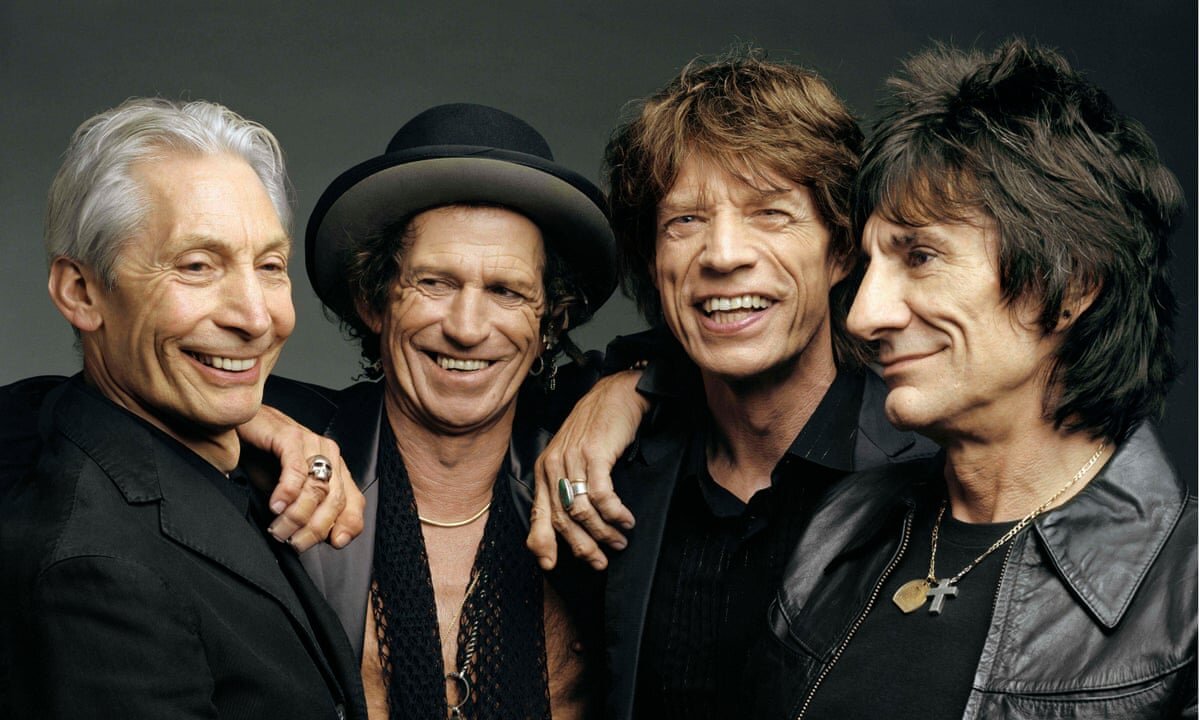
Rolling Stones Show the Art of the Roll-Out
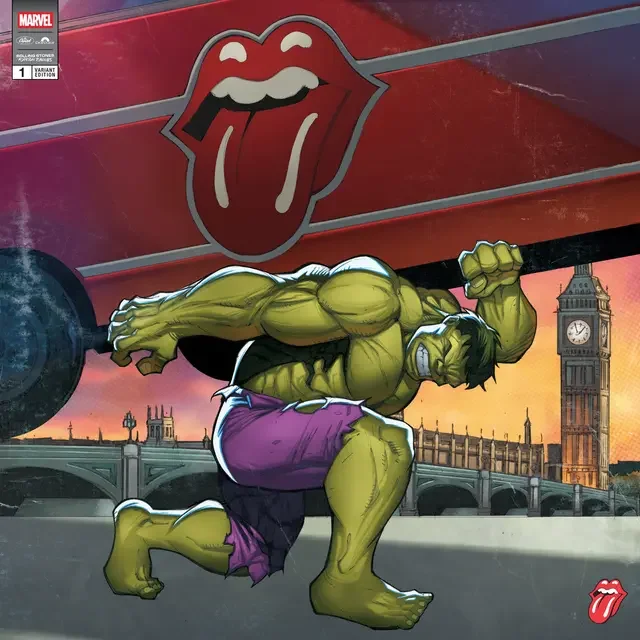
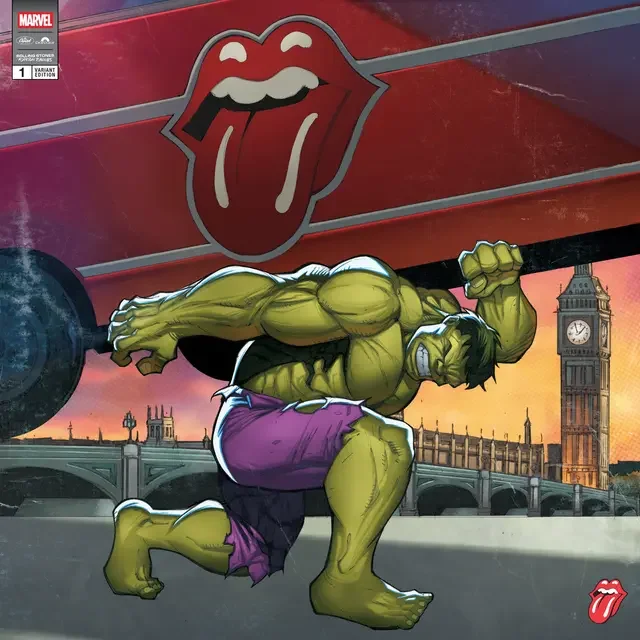
One of the variant covers of “Foreign Tongues”
What happens when a board room releases an album?
When Mick Jagger released the self-titled album by SuperHeavy in 2011, I created a Spotify playlist titled “The Other SuperHeavy.” The project featured Jagger, Joss Stone, The Eurythmics’ Dave Stewart, Damian Marley, and A.R. Rahman, and the song titles were so banal that I could find and pull together another song with the same title for almost every one on the album when released.
After that experience, I checked the song titles when The Rolling Stones released Foreign Tongues on Friday and saw the same thing. The guy who once wrote songs titled “Sympathy for the Devil,” “Street Fighting Man” and “Paint it Black” came up with “Divine Intervention,” “Mr. Charm,” “Jealous Lover,” and “Never Wanna Lose You.” Again, I could make a playlist of songs with the same titles but all by artists other than the Stones. Such commonplace language makes the songs they’re attached seem as if they’re not something he cares about, which makes it impossible for me to care.
The album is professional entertainment made by very talented people, so I’m entertained enough when it’s on but I don’t think about it when it’s not. I’m more interested in the run up to the release because it looked like the Stones put a lot of energy into selling vinyl records, which is a project they likely aesthetically connect to because it’s what they did for so many years. That emphasis from a band of eightysomethings only draws more attention to their age, and the run-up made them look out of touch. Elegantly, stylishly, expensively out of touch, but out of touch nonetheless.
On June 10, they first employed a gimmick that comic book publishers employed in the ’90s and announced five variant covers. At the time, the variant covers were the comic book equivalent of junk bonds that were treated like investments that were only momentarily valuable. Ironically, the Foreign Tongues variant covers featured Marvel superheroes in an effort to incentivize fans to buy multiple copies of the same album because collectors are completists and some believe that the rarer covers would be worth more. I could observe that Marvel hasn’t had counterculture caché since the late 1960s, but I don’t think the Stones try all that hard to claim counterculture credability anymore.
Part of the message accompanying Foreign Tongues is that the Stones have left the boardrooms to bring you new music. Everything about their presentation highlights their capital ‘S’ significance, including collaborations with Marvel and NASCAR.
For the July 4 weekend, The Rolling Stones partnered with NASCAR for Stones/NASCAR-collab merch, a special NASCAR-themed cover for Foreign Tongues, a special “listening lounge show car” to appear throughout Chicago during the weekend, and “original content highlighting the parallels between professional drivers and touring musicians,” according to a press release. To be fair, at least this seems aimed at an audience that probably still cares a lot about guitar-first rock ’n’ roll and may well genuinely engage with the music, but it’s trying to sell them another variant cover among other things.
How else do people sell music in the mid-2020s? They have podcasts, so the Stones have a podcast, Speaking in Tongues. Years of never revealing any more than necessary have stuck though, so they give us the sound of Mick, Keith, and Ron Wood’s voices, but they don’t say much.
Jagger also sat down for an interview with The New York Times because that is the prestige thing to do. Rock critic Mikal Gilmore said on Facebook that it might be the “single best” interview he has seen with Jagger, and I get the enthusiasm. Jagger gives more than you would expect, and David Marchese asks questions that inspire reasonably engaged responses. Still, when asked about the band’s relationship to its audiences at concerts, Jagger loses me.
“At the New Orleans Jazz Festival, they didn’t come to see you,” Jagger said, which suggests that the band is just one among many performing that day. Strictly speaking, that’s true, and I took the statement in part to reflect his respect for New Orleans, its music, and the festival. I’ve heard that he got out to see music on some of the other stages while at Jazz Fest.
But in 2024, Jazz Fest put the band on a special Thursday with a Stones-specific stage and charged $225 for that day when tickets were $85 the rest of the festival. Jazz Fest only sold as many tickets for the day as would fit at the stage they played, and the rest of the festival stages shut down before The Rolling Stones started so that all eyes would be on them.
The Jazz Fest faithful who are also Stones fans got everything they wanted—a good day of New Orleans music topped by The Rolling Stones, but for a lot of the band’s fans that don’t usually do Jazz Fest, The Fair Grounds were just the location of The Rolling Stones’ stop in New Orleans, where Samantha Fish and Dumpstaphunk were the opening acts.
It’s also possible that some pass holders left early, but the bottom line is that the Stones’ management and the Jazz Fest producers did everything possible to make sure they got the spotlight at the end of the day, and that was the experience people paid to see.
Industry critic Bob Lefsetz argues that the music business in 2026 is about getting streams, and if the band wants to be part of the culture now, that’s a far more valuable goal than the sale of physical goods. Each vinyl copy will likely be heard by the guy (probably) who bought it, and maybe his wife or family will humor him and listen to it a time or two with him. That album will only be heard by a few people, whereas actual relevance comes with streaming. Lefsetz thinks a better interview would have been with YouTuber Rick Beato.
Marchese’s interview is thinky. He asks Jagger to engage with his age, his legacy, and his reality, all of which are really interesting. But Beato’s deep dive interviews into technique, the mechanics of music, and the inheritance of classic and prog rock would have reached a more engaged audience. “That's the kind of information that needs to be spread if you want people to actually stream a song,” Lefsetz wrote. Beato’s interviews with Pink Floyd’s David Gilmore and his recent deep dive into Rush’s career make you think about the viral possibilities a Beato interview with Keith Richards or Ron Wood would offer.
Of course, the band marketed Foreign Tongues with pre-release videos, “Jealous Lover” featuring Anya Taylor-Joy to put a more youthful face on the band as she plays a jealous lover. Taylor-Joy was born, incidentally, between the releases of Voodoo Lounge and Bridges to Babylon. But “In the Stars” goes that video one step better. “Jealous Lover” uses a young, beautiful actress to give the song some currency, while “In the Stars” gives us young, beautiful Rolling Stones courtesy of AI. Mick, Keith and Ron are digitally de-aged to the 1970s, which is icky on its own, but it’s made worse by the need to make Mick the object of attraction of actress Odessa A'zion, who’s dancing to the song in denim short shorts and licking the side of Mick’s digital face.
There’s a genuinely interesting idea in the video as musicians from decades of genres and looks all play the song too because the Stones influenced everybody, but being revered and influential isn’t enough. Even at 82, Mick still needs women a quarter of his age to find him hot and will do what he can to look like that.
But wait! There’s more! How do musicians reach young fans these days? By getting into their videogames, and there is now a Rolling Stones entertainment destination in Roblox. According to a press release:
Throughout the game, hosted in The Block, Roblox’s always-on entertainment destination where artists build interactive experiences alongside the Roblox creator community, players can unlock rewards and powers inspired by the band’s lore, vibrant spirit, and musical adventurousness. Then, from July 17 through 19, The Rolling Stones will host an epic finale show. Every hour, the game will transition to a new era of The Rolling Stones, with iconic hits from throughout their career rotating, each one anchored by a huge interactive art piece complete with dynamic video, lights, and effects.
To celebrate the occasion, Roblox invited established community creators to turn The Rolling Stones’ globally beloved logo into not only exclusive cross-platform avatar accessories, but also a limited-edition, co-branded physical item available to purchase via an in-game Shopify integration that connects directly to the band’s online store, closing the loop between virtual and physical.
It’s as hard to imagine that meaning anything to existing Stones fans as it is to imagine teens playing Roblox caring about music made by guys older than their grandparents. I’d like to have read Jagger’s answer if Marchese asked him to explain what will happen.
In 2024, I wrote, “The Rolling Stones are a cover band for themselves,” and I suppose new music is the way they try to prove otherwise. I’ve asked older artists why they still write and record new music and they usually say something to the effect of that’s what they do. I get that, but I wonder if that’s still true for the Stones. It might just be buying the hype, but I suspect Richards still probably enjoys playing his guitar and working out riffs, and he likely still has fun playing with Wood. But do they still really feel the need to make new music anymore?
In the current marketplace, a new Rolling Stones album feels more like a demonstration of imperial privilege than the release of an in-demand commercial product or an artistic expression. If another band released Foreign Tongues and Hackney Diamonds, it would have an audience that would love it, but it wouldn’t be on one of the last remaining major labels, and it wouldn’t come with such an elaborate, boardroom-heavy roll-out.
Creator of My Spilt Milk and its spin-off Christmas music website and podcast, TwelveSongsOfChristmas.com.