The Howlin' Wolf Sues StubHub to Defend New Orleans Music Community


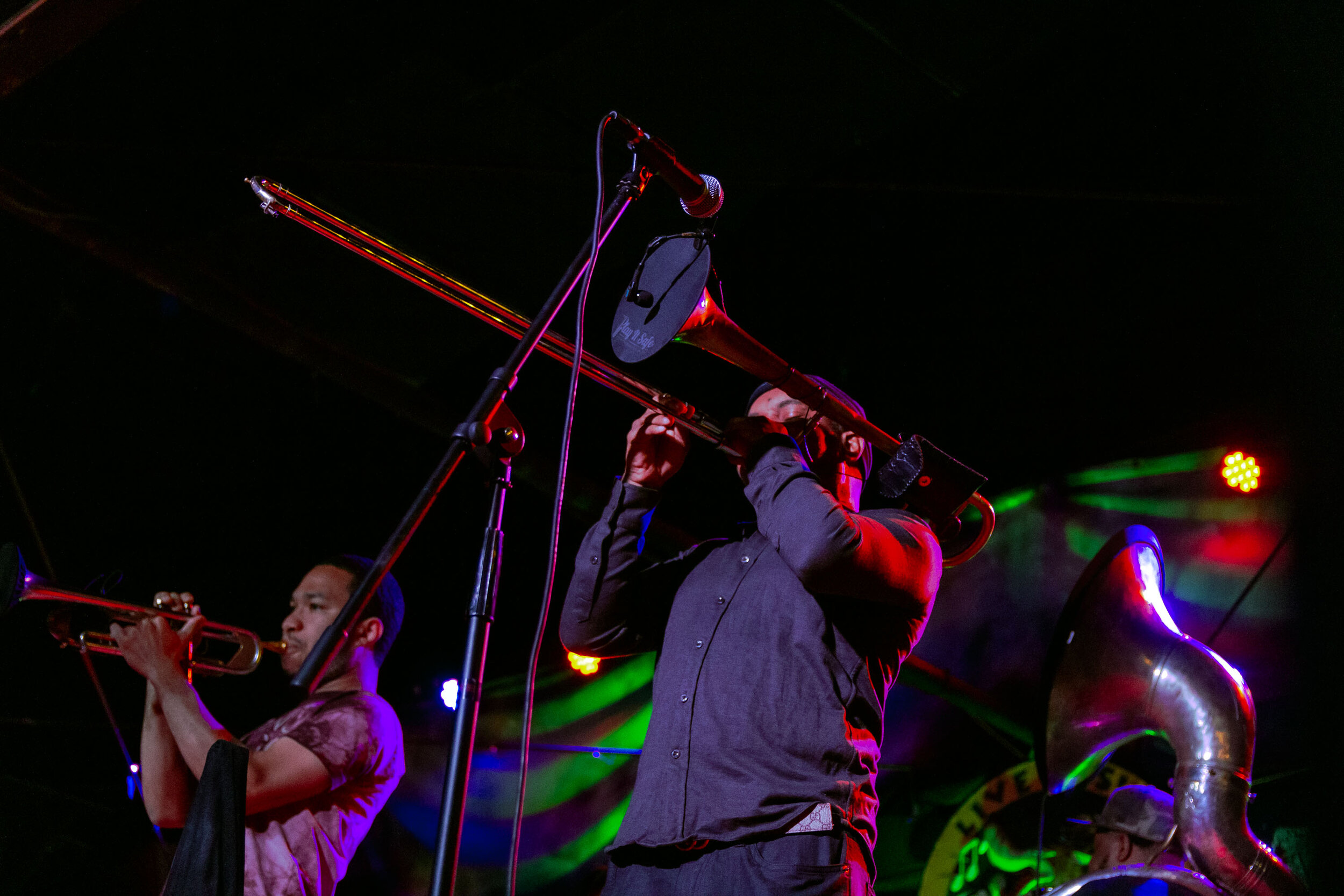
Trombone Shorty’s draw on the road is affected by ghost tickets. Photo by Jean Frank.
The practice of “speculative selling” undermines the trust and goodwill between audiences and venues, The Howlin’ Wolf’s owner says.
On the eve of NOLAxNOLA, The Howlin’ Wolf sued StubHub. The event that concludes this weekend celebrates New Orleans’ and the clubs it lives in, but on September 10 Cat and Dog Ltd.—The Howlin’ Wolf—sued StubHub for the practice called “speculative” or “spec” selling. That means sellers list tickets for sale that they do not yet have and may never acquire. Howlin’ Wolf owner Howie Kaplan sees the practice as a threat not only to his business but the New Orleans music community.
The suit isn’t over all of StubHub’s activities, only spec selling. StubHub considers a sale completed when the buyer buys the ticket, not when the ticket is delivered, so there’s limited incentive for spec sellers to actually acquire and deliver the ticket purchased. The Howlin’ Wolf has had people show up at the door with a fraudulent ticket and not understand why it doesn’t work because they paid for it, often well more than face value. These tickets are also referred to as “ghost tickets,” and many soccer fans were furious when they discovered they had paid thousands of dollars for speculatively sold tickets to World Cup matches listed on StubHub that were not associated with any actual tickets or seats.
In Stub Hub’s “Seller Policies,” the first section is titled “Some Of The Things You're Not Allowed To List.” Under a section with the bolded header “Speculative tickets,” the policies read, “speculative tickets or ‘spec tickets’ are tickets that are listed for sale or sold before the seller actually owns the tickets or before the tickets have been allocated to the seller. Listing or selling speculative tickets on our Site is not allowed and may result in account suspension, fees, charges or other consequences.”
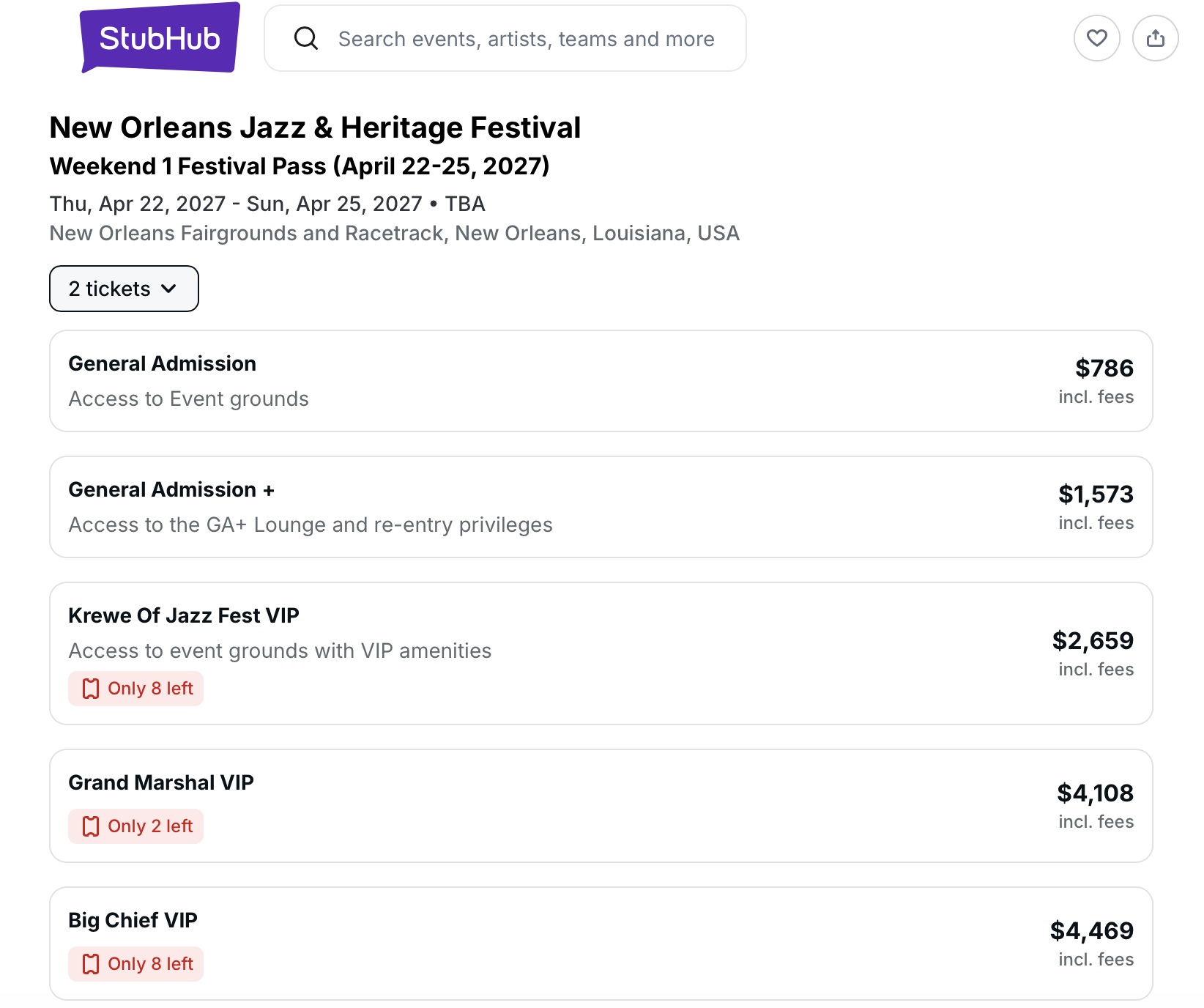
Nonetheless, it continues to happen and is a common practice. As Gambit’s John Stanton pointed out this, tickets to the 2027 Jazz Fest are already on sale on StubHub even though tickets have not been announced or put on sale. You might think that StubHub might take town a sale someone point out such an egregious example of speculative selling, but not only did StubHub not do that, it allows the seller to sell two General Admission tickets for $766 with a flag on the sale, “Only 6 left.” Yes, according to a seller on StubHub, Jazz Fest is on the verge of a sell-out. [Note: “Only 6 left” was removed between the time of writing and publication).
So far, StubHub has shown little indication that it sees anything to clean up. On August 20, The Stone Church venue in Brattleboro, Vermont filed a very similar suit to The Wolf’s alleging the same practices and in violation of the same Lanham Act, also known as the Lanham Trademark Act of 1946, which among other things prohibits deceptive advertising.
“You can't sell something you don't own,” The Howlin’ Wolf’s Howie Kaplan summarizes. “You can't act in a fraudulent and deceptive manner, and I can't think of anything more fraudulent or deceptive than what they're doing.” Kaplan’s lawyers connected that to the Louisiana Unfair Trade Practices Act (LUTPA) because up to now, the enforcement mechanism was civil court, which favored the party with the deeper pockets. Invoking LUTPA increases the possibility of actual enforcement.
Kaplan has run the Wolf for 23 years, he has managed bands, he has been active in support of indie music venues as a member of the National Independent Venue Association (NIVA) and he served as New Orleans’ “Night Mayor” for almost two years during LaToya Cantrell’s second term as mayor. He tried to address the problem by passing legislation in Louisiana. Fourteen other states have passed some type of resale legislation, and he had a bill sponsored by Senator Jeremy Stine of Lake Charles, but “the legislation got pulled because the scalpers went straight to the people that they'd been giving money to and started giving more,” Kaplan says.
Kaplan’s careful to observe that the lawsuit is focused on one specific part of StubHub’s business. If people want to resell tickets that they own, he’s okay with that. He’s specifically focused on speculative selling because it’s damaging on a number of levels. As the suit points out, The Howlin’ Wolf is the primary ticket seller for Howlin’ Wolf shows. “Tickets to events at The Howlin’ Wolf are also advertised, listed and re-sold on StubHub’s platforms,” the complaint reads. “StubHub’s false advertising of those event tickets as alleged herein currently threatens, and will continue to threaten, Plaintiff’s commercial interests by diverting ticket sales to StubHub that would otherwise be made to The Howlin’ Wolf, and deterring and/or steering consumers away from buying all-in-priced tickets sold directly by The Howlin’ Wolf. Plaintiff is also suffering, and will continue to suffer, harm to its reputation and goodwill with customers because of StubHub’s fans and misleading advertising of ticket availability.”
The Howlin’ Wolf has had people show up at the door with “tickets” purchased from a speculative seller on StubHub who never actually bought tickets from the Wolf. After a few moments of confusion, door people honored the tickets, but according to Kaplan they were also upset anyway. Buyers don’t know who is responsible for complications at the door, so scenes like these hurt the venue’s reputation, even when it’s trying to be cooperative.
Kaplan’s concern is that spec selling hurts the music community. The money spent on a ghost ticket goes to the seller, not musicians or local venues. That’s money that never arrives in New Orleans. The NIVA Economic Impact calculator says that for every dollar spent in an independent venue, $12 to $15 goes back in direct spending in the local economy. Kaplan points to a bite on the way to a show, or a round of drinks at Ms. Mae’s or 45 Tchoup on the way to Tipitina’s.
Ghost tickets actually hurt the local scene, he says. One New Orleans venue told him it has seen an increase in its no-show rate to more than 20 percent, and that’s a large enough number to change the vibe of a crowd. In Vermont and states that have passed bills that prohibit ghost tickets, “their no-show rate has dropped dramatically.”
In New Orleans, an issue like this is a real problem because the New Orleans music community is built on live music. More artists are learning to make good albums and work effectively in the recorded music marketplace, but the music New Orleans is best known for is made to be experienced live. Anything that hurts the viability of the live music scene is an existential—not theoretical—threat. Conflicting information about a show sows doubt about a show, and Kaplan has received calls from people to confirm that shows are actually taking place.
In an extreme case, StubHub listed tickets for a show at The Howlin’ Wolf with comedian Brian Posehn that never happened. When the Kaplan and the booking agent thought they had a deal, the show was listed but tickets were not on sale. Within the hour, something came up and the show was canceled, but bots had found it during the brief time that it was listed and put spec tickets on sale on StubHub.
The raw, relentlessness demonstrated by bots has forced an old fashioned solution like a lawsuit. “I was in a meeting once and the head of security for Ticketmaster was there,” Kaplan says. “This guy was talking about how in one day they stopped one billion bot attacks. Stopped one billion. How many got through?”
The problem isn’t only local either. It affects New Orleans’ bigger artists here and on the road. “Trombone Shorty's average ticket price in New York is probably around $70, $80,” Kaplan says. “In the secondary market, it's selling for $250.” At that price point, Shorty becomes someone that people see once a year instead of a few times a year.
“Shorty doesn't make that money. The venue doesn't make that money. They're not buying merch. They're not doing all these things that our ecosystem counts on,” Kaplan says.
Creator of My Spilt Milk and its spin-off Christmas music website and podcast, TwelveSongsOfChristmas.com.