Bunny Matthews vs. The Mainstream

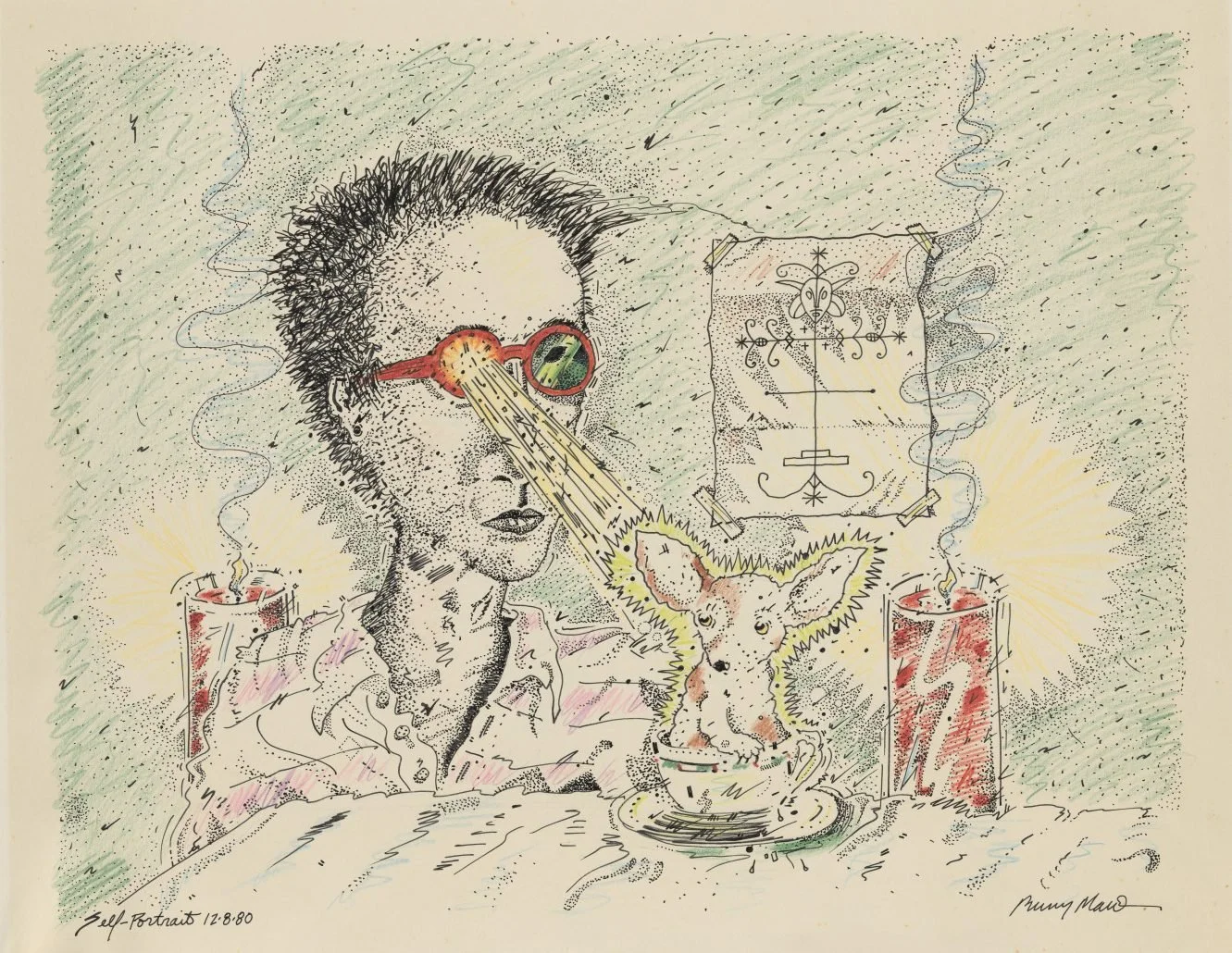
An early self-portrait by Bunny Matthews, courtesy of the Historic New Orleans Collection
The new book on the New Orleans critic and cartoonist presents him as someone at war with the status quo.
[The first version of this piece ran in the pages of Antigravity’s September 2026 issue. Thanks to the Antigravity staff for the platform and editing help on this piece.
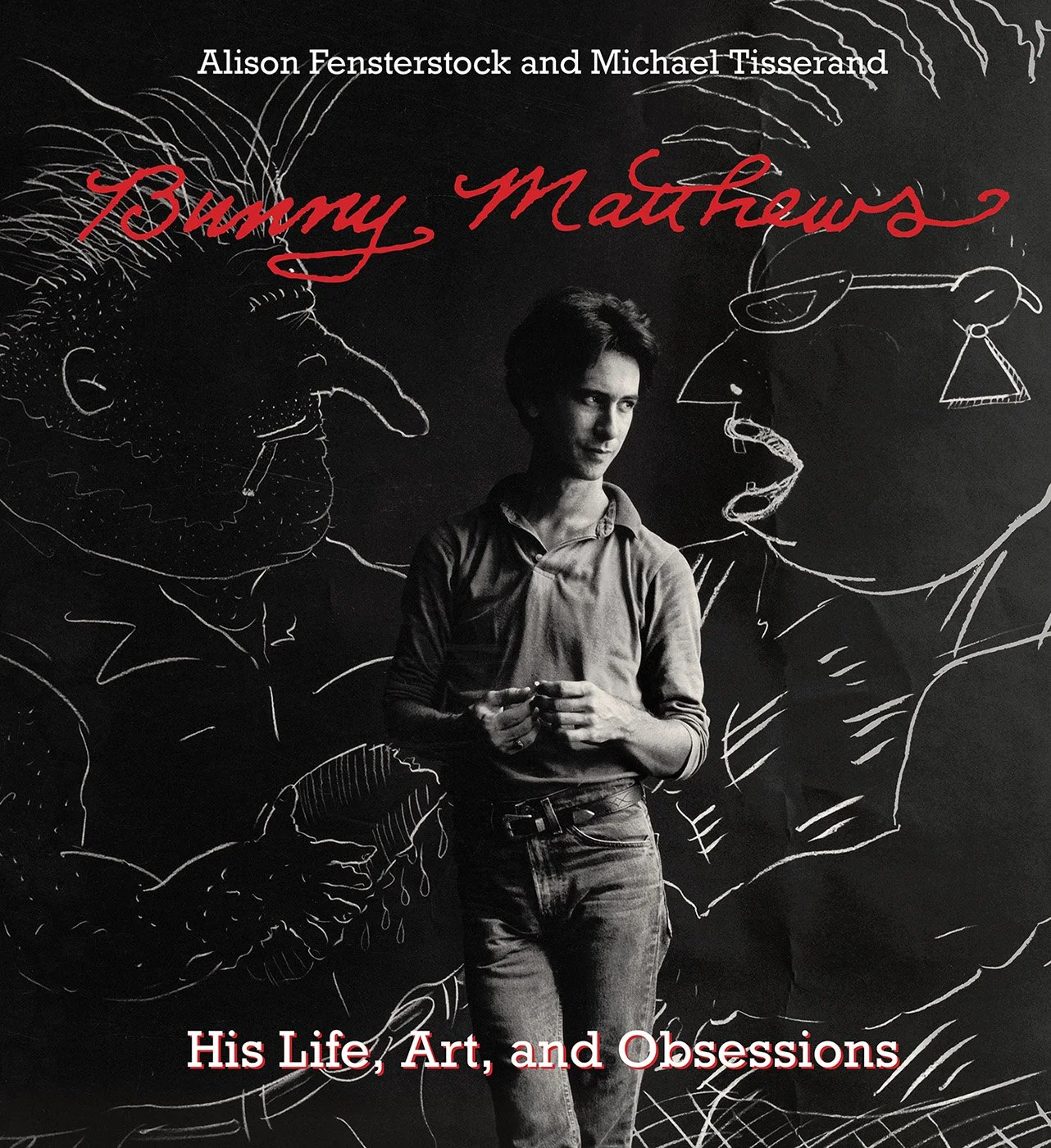
On Saturday, the Historic New Orleans Collection will host Bunny Day, a series of free events planned the publication of Bunny Matthews: His Life, Art, and Obsessions by Alison Fensterstock and Michael Tisserand. - ED]
Bunny Matthews would be amused by his legacy. After 70 years as a burr under the saddle of New Orleans’ culture, he died in 2021 without any collected works in print. Anyone who wants to read his music and cultural criticism or see his cartoons has to do library archaeology. He lives on the side of Leidenheimer bread trucks, where his illustrations drive through the streets of New Orleans without him.
Still, Bunny’s name has talismanic value for many New Orleanians, in large part because it’s Bunny. More importantly, he’s one more inductee into Da Krewe of Ain’t Dere No Mo’—a collection of figures, venues, stores, and happenings that represented something essential to the way people think about New Orleans.
Alison Fensterstock and Michael Tisserand do their best to pin down his complicated journey through New Orleans’ culture in their new book published by the Historic New Orleans Collection, Bunny Matthews: His Life, Art, and Obsessions. They never explicitly frame his life in these terms, but you can read between the lines and think of his life’s work as a smartass pursuit of an authentic culture. The New Orleans he came of age in already had Professor Longhair and James Booker as Exhibits A and B—musicians who couldn’t come from anywhere else. As a cartoonist, he thought the working class Nint’ Ward residents that inspired his characters Vic and Nat’ly and their lumpy friends displayed such a lack of self-consciousness that they too felt uncompromised by American mass culture.
Bunny made his name as the music critic for Figaro, a forerunner to Gambit in 1974, when music journalism at that time was a less domesticated beast than it has become today. The first generation of music journalists tried to match the music with what they considered the literary equivalent of rock ’n’ roll that they thought the music deserved. It was writing meant for the moment, not bothered by any concerns about legacy.
That’s the tradition Matthews jumped into, and the passages in the book from Matthews’ Figaro days show an obvious debt to Hunter S. Thompson. Thompson blurred the line between reporting and fiction with booze and drug-fueled tall tales that helped reveal truths about the counterculture and its relationship to mainstream culture. Fensterstock and Tisserand quote from Matthews’ first-person coverage of Professor Longhair:
when you’ve been out at the Fair Grounds for eight straight hours in the sunshine, and you’ve had a couple of six-packs of contraband Dixie, untold illicit mood elevators and it’s late in the day on the very last day of the entire Festival and you’ve got exactly one fat joint of prime Louisiana-grown sensimilla left which you have just stuck between your lips as Professor Longhair launches into ‘Tipitina’ at the exact moment you ignite the end of the gage with a match made in Kenner from willow trees grown along the banks of the Mississippi and you take that first long sweet draw of the burning herb and several thousand people are doing the best mambo they can do all about you, there is very little doubt who is New Orleans’ Numero Uno musician.
Writing about Fess was an act of meta-criticism, not only because championing him required Bunny to advance aesthetic values that had long been rejected by the buyers whose favorite music topped the charts, but because Fess worked as a janitor. America was indicted by the fact that he was neglected while Tony Orlando and Dawn had the number one song in 1973 with the silly, sappy “Tie a Yellow Ribbon Round the Ole Oak Tree.”
When Bunny evangelized for Jazz Fest, it was a gathering of the people like him who heard something too pure for mainstream success in New Orleans music. He would become one of the festival’s most pronounced critics when uncool people found it too.
That experience raised questions all critics eventually have to ask themselves: Am I advocating for music that embodies a set of aesthetics and values, or am I rationalizing my position in the game of Cool Us vs.Uncool Them? Is my criticism real or a Three-Card Monte, with the masses never able to find the cool card because I palmed it?
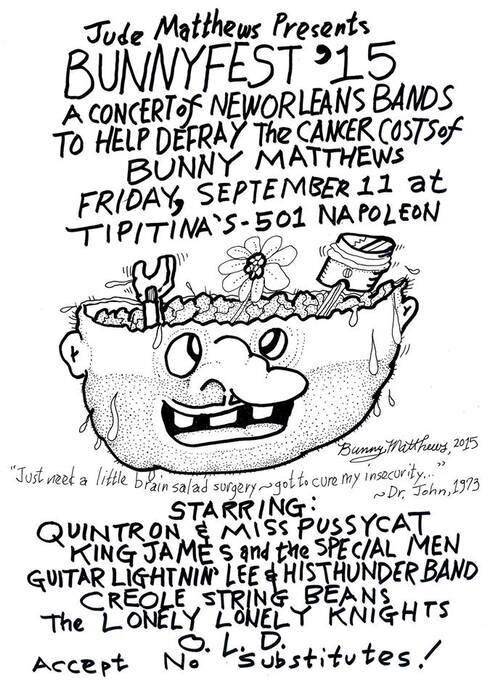
Fensterstock and Tisserand never articulate a definitive answer for how Bunny thought about with those questions. They gesture toward the latter, which was how I felt when he was my editor at OffBeat. He was very supportive of me as a writer and drastically expanded my role in the magazine. I think he liked having someone who respected New Orleans’ music but hadn’t drunk the Kool-Aid, because OffBeat’s subscriber base was thick with people who flocked to Jazz Fest and Radiators shows and WWOZ’s Piano Night long after they stopped being magical for Bunny. He moved on to punk and new wave to plant the flag of Cool over there, at least for a while. While at OffBeat, he re-planted that flag in the Ninth Ward for Quintron and Miss Pussycat, The New Orleans Bingo! Show, Die Rötzz, and other garage punk bands active in that neighborhood. He was excited to play me an album by Señor Coconut—an electronic artist who transformed Kraftwerk songs into mambos.
My guess is that he found Señor Coconut novel more than awesome. I also think while there was a lot genuine in his affection for Clint Maedgen and Quintron and Miss Pussycat, they were also the de facto beneficiaries of his dissatisfaction with the way rock ’n’ roll no longer served as a disruptive force. When a band from the Northshore started to get national industry attention, Bunny planned to interview them and use the exchange like a prosecution to unveil them as pretenders because they came from the Christian rock world. He didn’t confront them when the interview finally took place, perhaps because he had better manners than that, and perhaps because he had spent the little energy he had for the band when he explained his plan. Once he had registered his boredom with their conventional rock ’n’ roll and that of other unconvincing rock bands at the time, he could write something more in keeping with OffBeat’s voice, throwing barbs instead of bombs.
I don’t think he was very happy at OffBeat. Fensterstock and Tisserand present him as energized around the younger staff members in the office, and I always found him ready to talk shop in his way. But the crusade that he started during his days at Figaro had calcified into a job. Being disruptive had become harder after punk, Andy Kaufman, and David Letterman when mainstream culture had learned it could absorb and neutralize almost anything. In New Orleans, Bunny’s icons of authenticity and idiosyncrasy had been so thoroughly digested that they no longer carried even a hint of countercultural frisson, and the effort showed when Bunny tried out other sticks with which to beat on the mainstream.
That said, it was hard to be sure what represented Bunny’s real, deeply held beliefs. He had been professionally arch and ironic for so long that he could seem glib about things he cared about and dogmatic about things that didn’t matter. He could walk through his prosecution of the Northshore band in detail or envision in detail a cover concept that had no chance of happening, then write something he actually connected to with no fanfare or warning.
Ultimately, I saw his art and writing as two manifestations of the same impulse. The culture he inherited disappointed him, and he responded to it by championing the musicians and people whose presence revealed its emptiness. The literary and graphic style he employed was his way of signing his work and putting an exclamation point on his dissatisfaction.
People will have a lot of different responses to Bunny, and all of them are valid. He played recklessly with sexism and racism—to prove personal points, I assume—but his motives don’t excuse him. Bunny Matthews: His Life, Art, and Obsessions reveals his complicated journey through New Orleans, and it’s safe to say that its cultural landscape would be very different without him.
Creator of My Spilt Milk and its spin-off Christmas music website and podcast, TwelveSongsOfChristmas.com.