K-pop Connects Fans More Than Stars
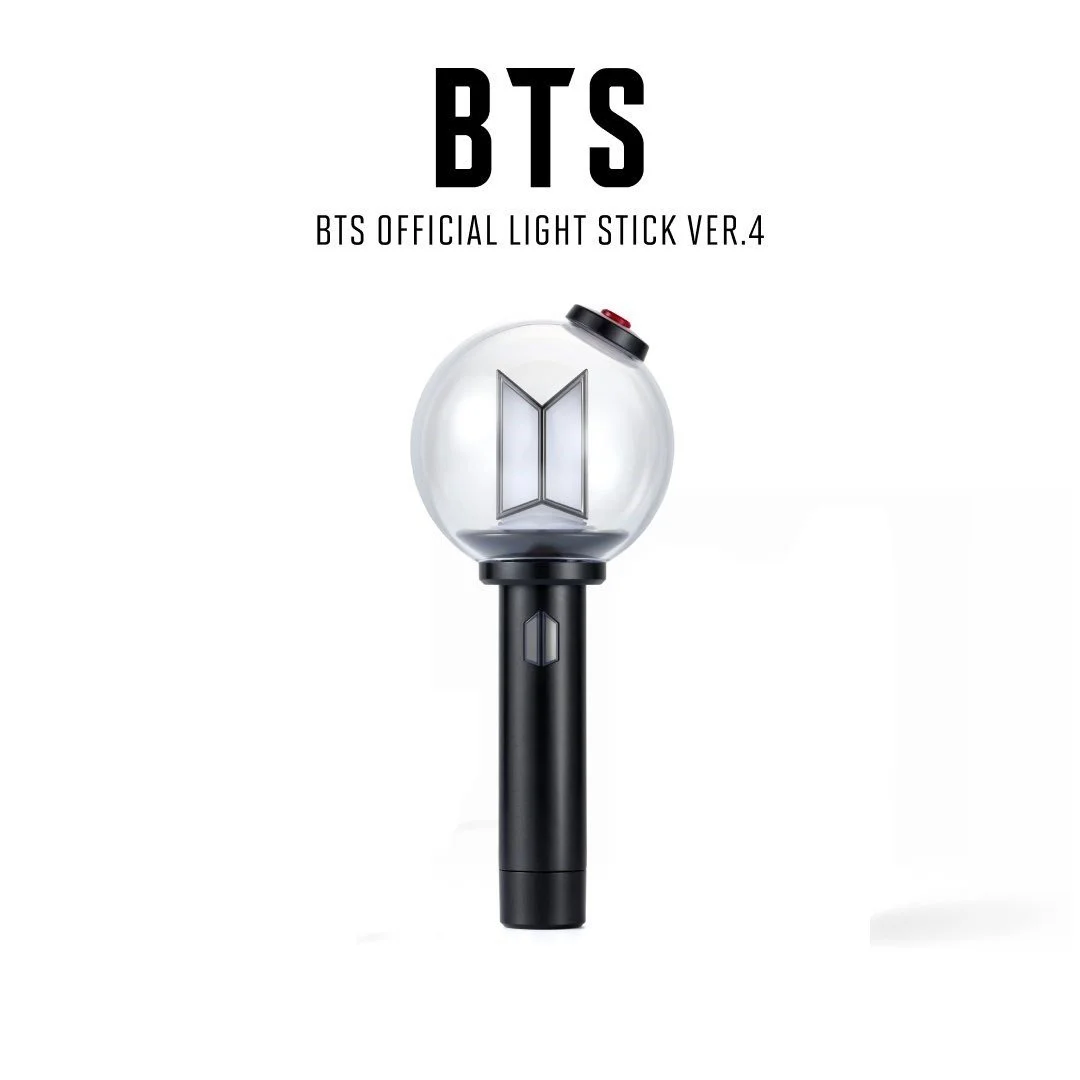
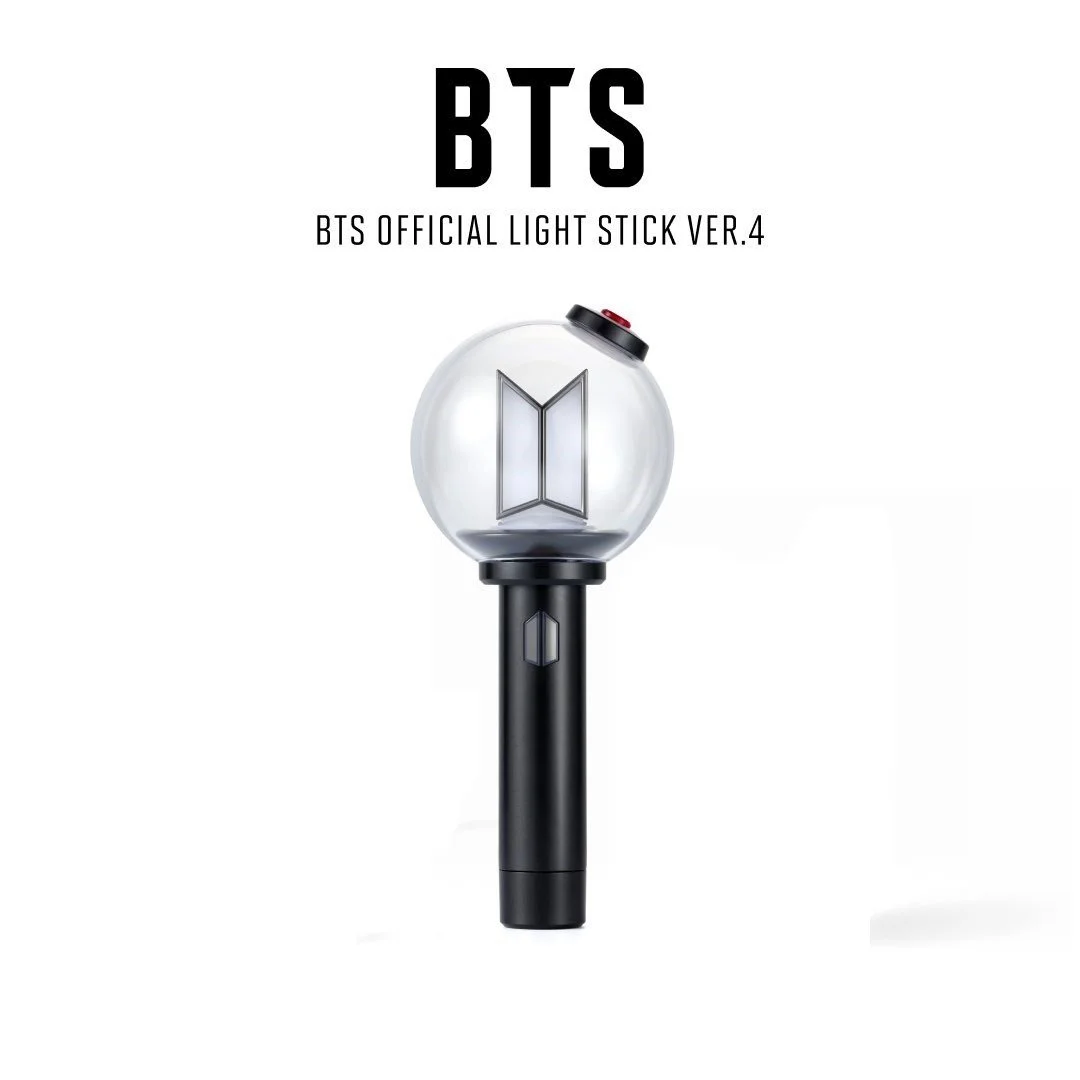
BTS’ light stick
What can K-pop’s approach to its audience tell western artists?
If there was a K-pop show in the States, there is a YouTube short, a TikTok, local television news story, and/or an Instagram reel that documents the absurdly long line to get to its merch stand. The line before BTS’ appearance in Las Vegas on the “Arirang” tour was blocks long, and when Cortis played Atlanta recently, people waited five or six hours to get a shot at limited edition T-shirts, sweatshirts, and light sticks—band-specific LED scepters that sync with the act’s lighting design to extend the light show into the audience as they flash and change color in unison.
The consumerist nature of K-pop fandom is disconcerting, but it’s a testimonial to the commitment of K-pop fans that they’ll go to such lengths to get band merch, and it’s one of the few things about K-pop that is unsettling.
As I recently wrote for Nola.com, the New Orleans K-pop community is open, inviting, and active, even though few K-pop shows make it to New Orleans. The closest New Orleans gets to a K-pop concert is a live viewing at an AMC theater, where there will be a showing of NCT 127 live from Seoul on September 20, and BTS live from Buenos Aires on October 24 and São Paulo on October 30. That doesn’t depress the community though, which like so many fan communities around the world sustains itself by embracing itself. K-pop fans love other fans almost as they love their “biases,” or favorite artists.
In addition to talking to members of New Orleans’ K-pop community for the Nola.com story, I talked to Lynn Bartsch, the U.S. CEO of Fanlight, the company that makes light sticks for K-pop bands. Her experience working with the K-pop industry and K-pop fandom has given her some insights into important differences between how American pop acts and K-pop acts approach their fans, and how fan communities can be better engaged.
Bartsch made sense of K-pop fandom by thinking about other pop culture fandoms, particularly Star Wars and Star Trek, which she experienced with her family. “We went to conventions and all kinds of things like that,” she says. “As a personal matter, I became really aware of and really valued the community that's built around things that people love in common, right?”
In those cases and Disney—another of her loves growing up—she liked the rich, imaginative worlds that the properties offered, but really, what links their fans are the shared values and interests.
This explains how K-pop can be a hub for such dynamic fan activity. On the surface, it would seem like music’s accessibility would be a problem since it’s in a foreign language, it’s hard to see live and, except for the biggest acts, hard to purchase since it doesn’t show up in conventional retailers. But those “impediments” are actually features, small tests to gauge shared values. Does the music move you enough to do the work to find more of it? If it does, it likely also moves you enough learn the choreography attached to songs, or craft bracelets or photostrips or cell phone charms that celebrate your favorites that you can share with others. In New Orleans, DJ Save Train has done bounce remixes of K-pop songs, and at a meet-up of fans of G-Dragon before his Las Vegas concert last year, fans celebrated G-Dragon’s appearance Vegas style with a homemade commemorative poker chip.
K-pop fans are predominantly female and young, two groups North American culture is prone to discounting. The North American music industry is also prone to seeing pop music fans as simply markets to target and exploit, whereas the K-pop industry is more likely to see fans as an essential part of an act. BTS members talk in videos and concerts about their love for ARMY—their fans—and to western ears those profound thank yous can sound like empty platitudes. K-pop artists are serious though, and generally think of their fans as the essential completion of an interaction because the songs as a medium for connection. Someone has to be on the other end to hear it and respond or the song had no purpose or meaning. For many American artists, the recording is the moment of self-expression, and once they’ve released their music, what happens happens.
Bartsch agrees but with reservations because there are a lot of generalizations in cross-cultural contrasts, and exceptions almost always come quickly to mind. “I do think there are K-pop groups, though, like Cortis, for example, and like BTS and Epik High and a few others that I would name that really were originally driven by artistic self-expression,” she says. “It's the constant battle that every successful artist has of How do I balance art and commerce?”
She sees the different approach to fans baked into the two countries’ music industries. “In Korea, Hybe, JYP, SM, whoever, they are everything,” Bartsch says. “They're the label, they're the agency, they're the content production team, they're the managers, they're the concert production team, they're the merch—they're everything under one umbrella so they're all pointed in the same direction. Anything that improves the situation for any one of those verticals improves the situation for everything.
“In the West, it's the exact opposite. The manager is separate from the label, is separate from the distributor, is separate from the concept or is separate from the merch team. And they don't all participate in the same revenue streams, so they're not all pointing in the same direction. They're often not all pointing in the direction that's in the benefit of the long-term health of the artist or the fandom.”
Some issues that arise in western labels and promotions teams are a product of sexism, conventional wisdom and lazy thinking. Bartsch has been in meetings with teams that envisioned engaging fans through competitions. “They always recommend something like, Let's do an online game where the fans can compete about who's the biggest fan by doing X, Y, or Z a number of times,” she says. “These fans don't want to compete with each other. They don't care about that. They're all competing to help their favorites win and succeed. They're all pointed at the favorite. They're not pointed at each other and they don't understand it.” Seeing fans as in opposition and not as a community ends up producing wasted time, energy and money.
In Korea, Bartsch points out, some of that is cultural. “Korea being a neo-Confusionist society operates by rules, and sometimes the rules are more important than the outcome under the rules. America's the opposite. We don't give a shit about rules. We care about the outcomes.”
The K-pop industry works to engage fans in ways that help their fans feel connected to the artists. BTS participated in the web series Run BTS that ran for four seasons with members of the group competing in game show-like challenges, the point being to show them interacting. They have also been the focus of two seasons of BTS in the Soop (BTS goes camping), Are You Sure?! (Jimin and Jungkook of BTS on a travel show), Suchwita (YouTube show with BTS’ Suga drinking with guests), and likely more. Their interactions give fans an idea of who they are, one that Bartsch says is pretty accurate.
“i can tell you that they are exactly who you think they are,” she says. “They do not have a switch where like their camera turns off and there's someone else. They are exactly the same people.”
BTS’ model doesn’t specifically apply across artists, whether K-pop or American, but the concept of creating ways for fans to feel connected to the artists does. YouTube certainly provides an opportunity to reach a massive audience, but some artists need to pursue other avenues because it’s a lot of time-consuming work to generate so much content.
One K-pop star Bartsch worked with was so introverted offstage that talking to guests in a studio or the fans through the camera was too much for him. “We built that into the show,” Bartsch says. They shot him reading for an hour, letting fans see his painfully shy side. “He did it once or twice, and actually fans really loved it. They chatted in the chat with each other and had fun hanging out with him, but he's just too shy. He can't do it.”
In New Orleans, we’re conscious of the connection between music and culture, but it’s easy to overlook it in the broader pop marketplace. K-pop has been a part of Korean television and celebrity culture for years, but it became part of a story in when president Yoon Suk Yeol declared martial law on December 3, 2024. Even though it was lifted within hours, protests continued in Seoul until he was impeached. K-pop became part of the fabric of the protests as people set an impeachment chant to the tune of “Whiplash” by aespa, Protesters also brought their light sticks and used them to rally in defense of their democracy. “The community brought their symbols of community, which are their lights to the protests,” Bartsch says. “That to me is amazing.”
Creator of My Spilt Milk and its spin-off Christmas music website and podcast, TwelveSongsOfChristmas.com.